
Industrial robots are the engine of modern automation. Capable of performing repetitive, demanding or high-precision tasks, they have become an essential tool for increasing productivity, improving quality and reducing operating costs in manufacturing environments.
In this article we explain what an industrial robot is, what its advantages are, how they fit into Industry 4.0 and what solutions AG ROBOT X offers to successfully implement them in different sectors.
What is an industrial robot?
An industrial robot is a programmable machine designed to perform physical tasks automatically, accurately and repetitively. Thanks to its robust structure, high level of control and integration capabilities, it is able to assume functions such as:
- Machining and milling
- CNC or laser cutting
- Handling and palletizing
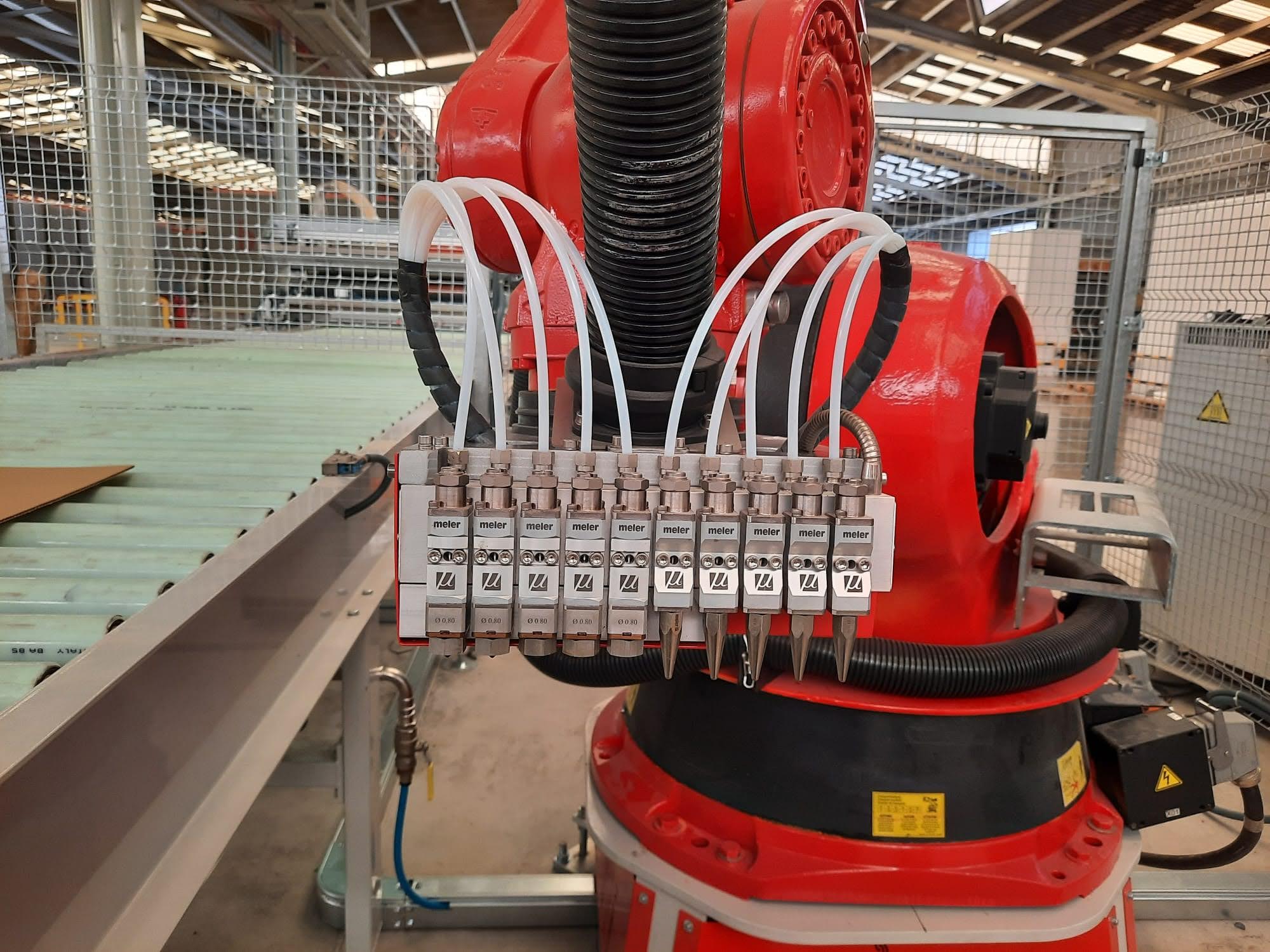
- Product application
- Assembly or inspection
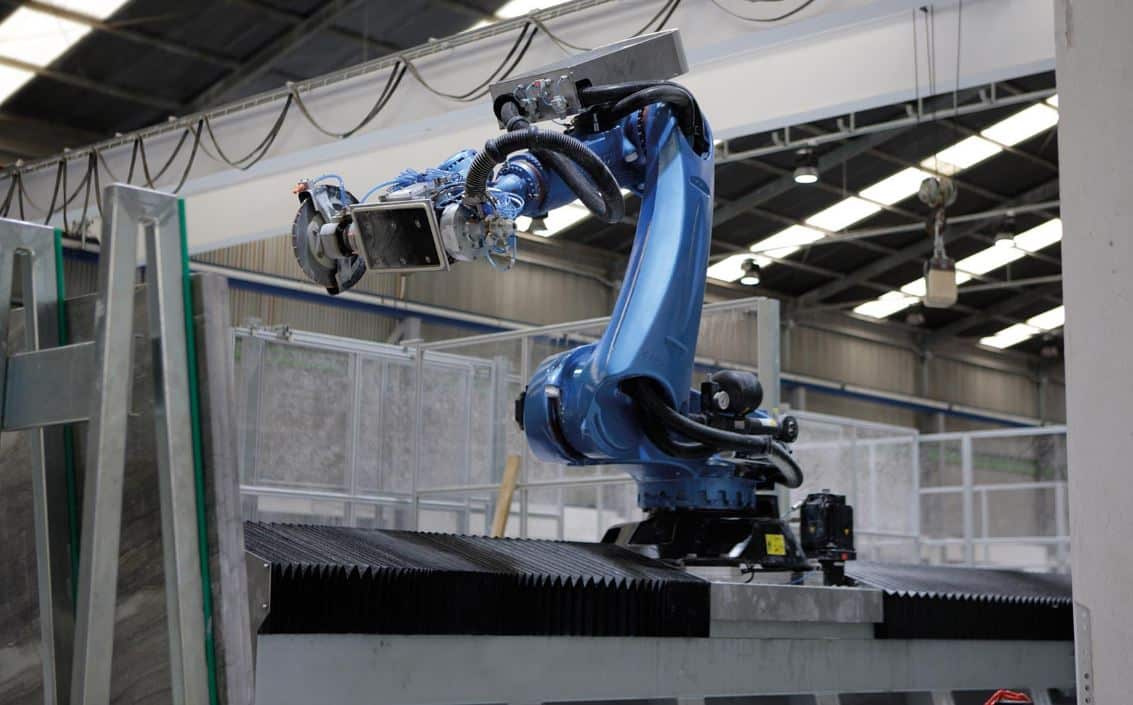
These robots can work autonomously or be integrated into robotic cells together with auxiliary machinery, sensors and industrial software. Their advanced programming allows them to execute complex trajectories, adjust force, speed and repetition parameters, and adapt to different working conditions.
Advantages of industrial robots in production
Industrial robots bring tangible benefits in multiple phases of the production process:
- High speed of execution in repetitive or high volume cycles.
- Greater precision in machining, cutting and critical tasks.
- Reduced downtime and improved operational continuity.
- Robustness and reliability, even in intensive shifts or demanding environments.
- Increased occupational safety when taking on hazardous or physically demanding tasks.
- Greater predictability, thanks to the controlled repetition of operations without variations.
In addition to all this, it has the capacity to work without interruptions, 24 hours a day, improving time utilization and reducing operating costs associated with downtime or human error.
Industrial robots in Industry 4.0
In the era of digitalization, industrial robots evolve alongside technologies such as IoT, big data, digital twins or simulation software. In this context, they become key nodes within a connected plant, where the entire production flow can be monitored, optimized and adapted in real time.
AG ROBOT X works on the integration of these robots with proprietary software, sensors and analysis systems to extract data, adjust process parameters and improve traceability. This type of integration allows the application of predictive maintenance strategies, resource optimization and decision making based on real data.
Sectors where industrial robots are applied
Industrial robots are applicable in virtually any industry with demanding production processes. Some real examples:
- Ceramics and technical materials: for handling, cutting and precision machining tasks.
- Construction and stone: sculpting, milling or product application on dense and complex materials.
- Metallurgy and material transformation: automation of cutting, welding or polishing.
- Automotive and components: assembly, welding and handling of heavy parts.
- Warehousing and internal logistics: integration with automatic transport and sorting systems.
They are also successfully used in sectors such as food, pharmaceuticals and cosmetics, where processes must meet strict regulations and require constant precision.
Solutions with industrial robots at AG ROBOT X
At AG ROBOT X we design complete robotic cells tailored to each customer’s needs. Our solutions include:
- Industrial robots for handling, polishing, product application and sculpting.
- Integration with proprietary software (such as ARM) for advanced trajectory and stress control.
- Add-ons such as our MSSC smart warehouse for automation 4.0 in custom parts manufacturing.
Automation that empowers the team
By incorporating industrial robots, companies can free their teams from repetitive, dangerous or physically demanding tasks, allowing them to focus on higher-value functions.
This redistribution of labor generates multiple benefits:
- Improved occupational well-being and reduction of repetitive strain injuries.
- Increased motivation, by allowing operators to take on tasks of supervision, control or process improvement.
- Fostering a culture of innovation and active participation in continuous optimization.
Ultimately, it is a question of empowering human talent, not replacing it.
Automation without compromising flexibility
Choosing industrial robots does not mean rigidity. Today, thanks to advanced programming, the use of sensors and intelligent software, industrial robots can adapt to different part formats, customized tasks and product changeovers without shutting down the plant.
At AG ROBOT X we believe that the key is to combine technology, engineering and experience to turn industrial automation into a tool that brings efficiency, safety and real value.
Do you want to know which type of industrial robot best fits your production line? Contact us and start transforming your plant.


